Problem Statement
The challenge
The existing screening workflow required clinicians to physically interact with hardware and software controls during active scans — creating infection risk from repeated contact, ergonomic strain, and fragmented patient records that slowed follow-up care.
Methodology
How the work moved
01Conducted in-depth interviews with radiologists, X-ray technicians, and clinic administrators to understand the moment-by-moment workflow during a screening session.
02Designed gesture and voice interaction patterns for touchless scan control, allowing clinicians to navigate screens, capture images, and annotate findings without touching shared surfaces.
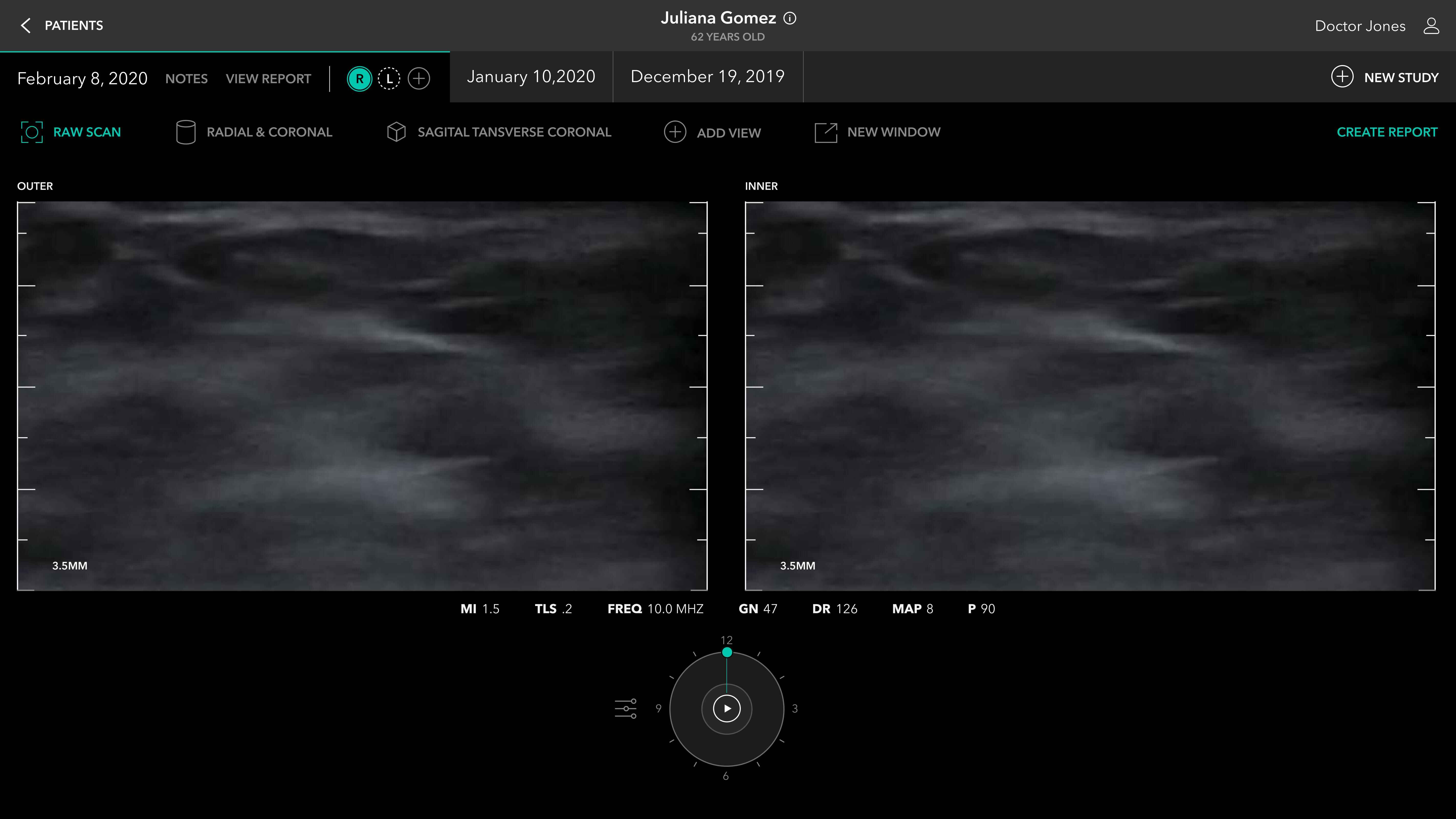
03Centralized patient history, scan timelines, automated measurements, and follow-up action queues into a single dashboard — reducing the need to switch between systems mid-procedure.
Key Decisions
Decisions and tradeoffs
Designed gesture and voice interaction patterns for touchless scan control.
- Alternatives considered
- [NEEDS INPUT: alternatives considered]
- Why I chose this
- So clinicians could navigate screens, capture images, and annotate findings without touching shared surfaces during an active scan.
- What I would do differently
- [NEEDS INPUT: what I would do differently]
Centralised patient history, scan timelines, automated measurements, and follow-up queues into a single dashboard.
- Alternatives considered
- [NEEDS INPUT: alternatives considered]
- Why I chose this
- To reduce the need to switch between systems mid-procedure.
- What I would do differently
- [NEEDS INPUT: what I would do differently]
Results and Impact
What changed
Shortened average screening session duration through streamlined workflow and fewer context switches. [NEEDS INPUT: verified number]
Eliminated direct hardware contact during scans, directly addressing infection control protocols in clinical environments.
Received strong positive feedback from clinical testers for intuitive gesture controls and reduced physical fatigue during long scanning sessions.

.png)
.jpg)
.jpg)
.jpg)
.jpg)