Problem Statement
The challenge
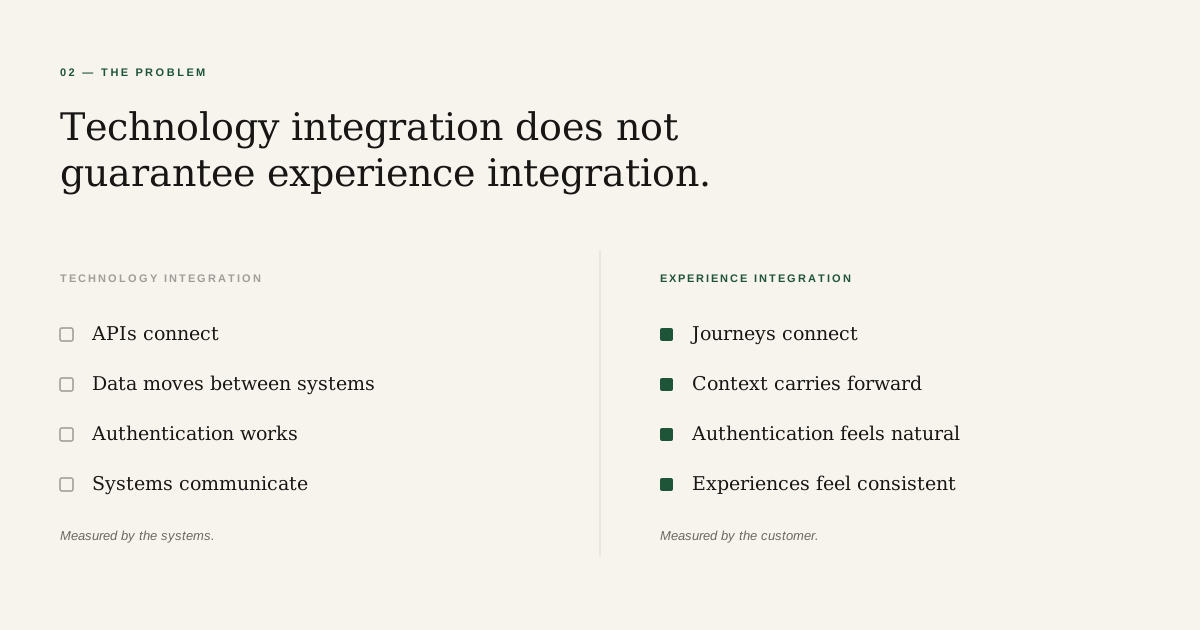
Financial institutions increasingly rely on specialized platforms — account opening, identity verification, digital banking, financial wellness — to deliver different parts of the customer experience. Each product may perform well independently, while the overall journey still feels disconnected. A technically successful integration does not guarantee experience integration. Customers encounter navigation changes, terminology shifts, repeated data entry, and inconsistent interaction patterns when they cross platform boundaries — without ever knowing they have.
Methodology
How the work moved
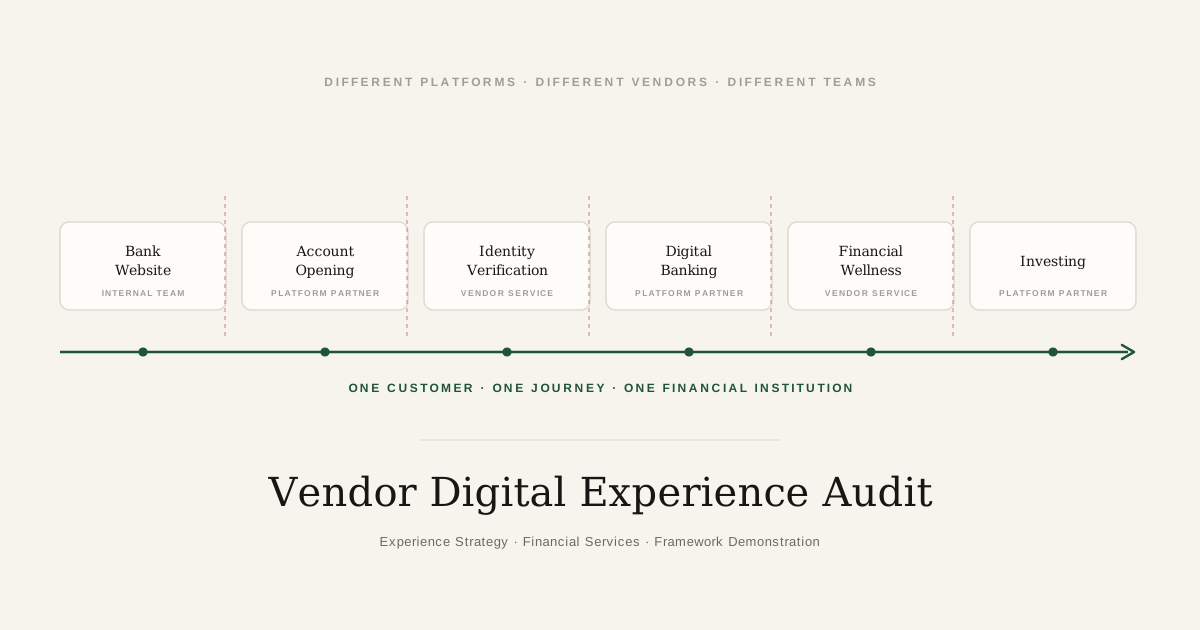
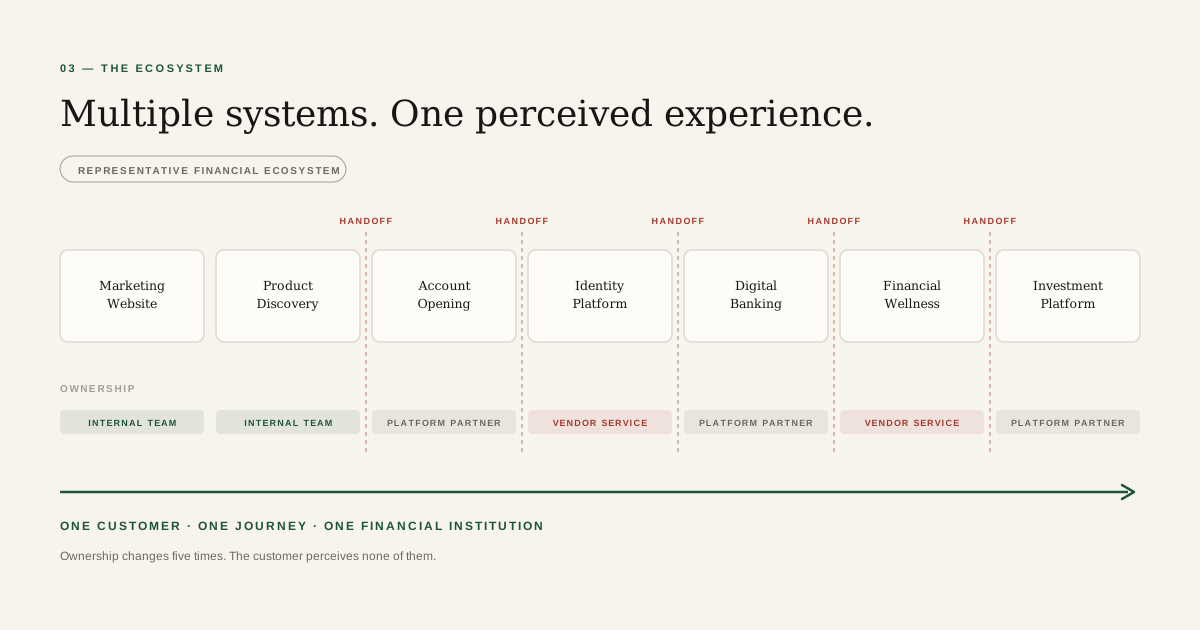
01Mapped a representative financial ecosystem across six platform touchpoints — Bank Website, Account Opening, Identity Verification, Digital Banking, Financial Wellness, and Investing — identifying internal team, platform partner, and vendor service ownership at each stage to reveal where accountability changes and fragmentation risk increases.
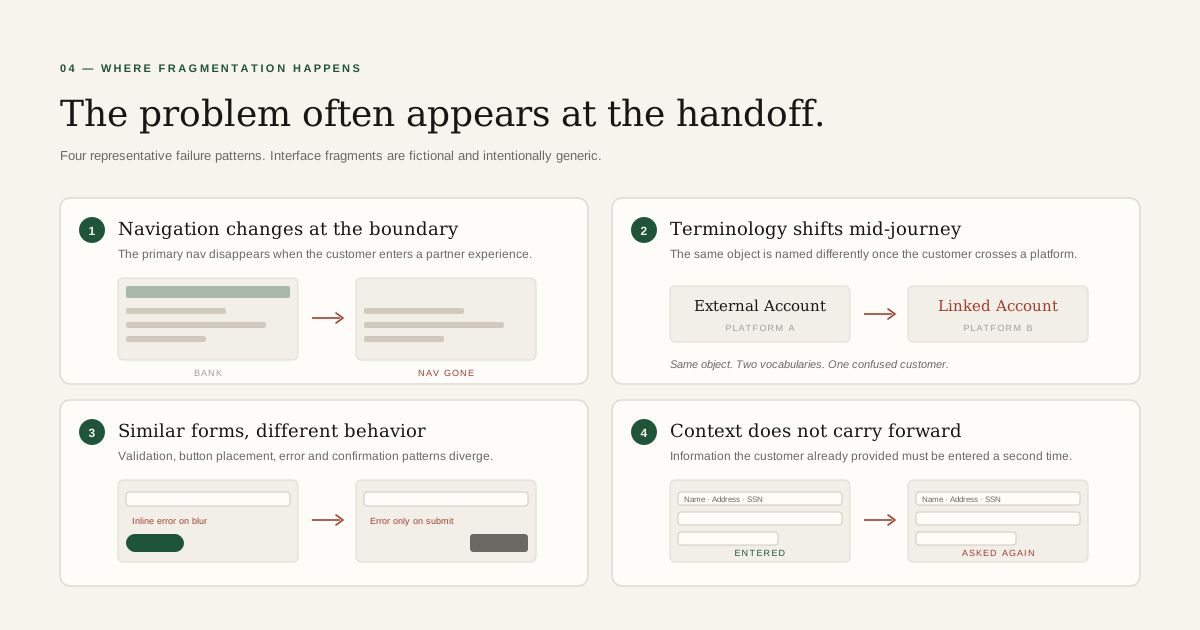
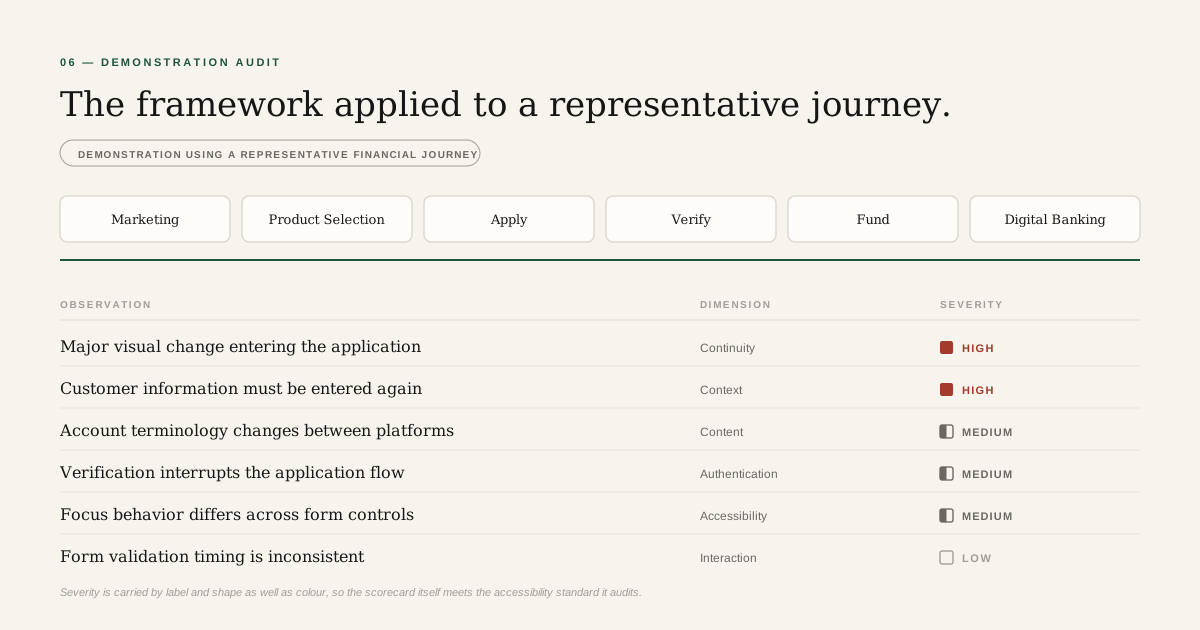
02Identified four representative failure patterns at handoff points: navigation changes when entering a partner experience, terminology inconsistency (External Account vs. Linked Account), different form validation and error behavior across similar interactions, and customer information that must be entered again after already being provided.
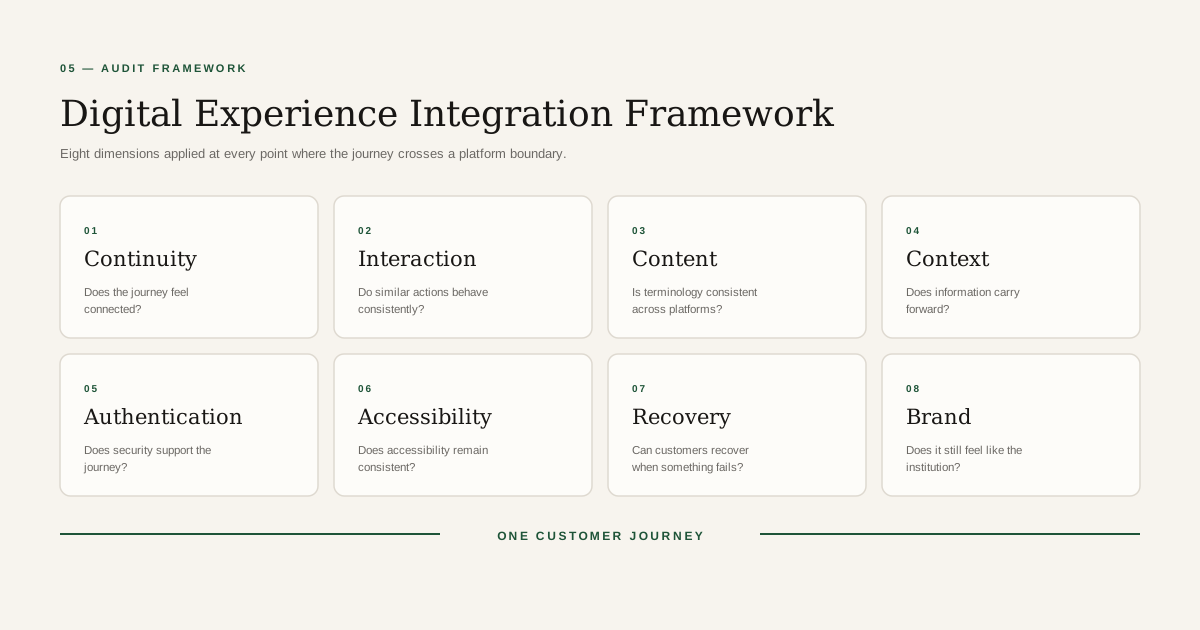
03Developed the Digital Experience Integration Framework — an eight-dimension scorecard evaluating Continuity, Interaction, Content, Context, Authentication, Accessibility, Recovery, and Brand across every platform boundary in the journey.
04Applied the framework to a demonstration audit across a representative journey (Marketing > Product Selection > Apply > Verify > Fund > Digital Banking), documenting severity-rated findings with annotated observations linked to specific experience breakdowns.
05Connected UX findings to business relevance through causal reasoning: repeated data entry increases customer effort and may contribute to abandonment; inconsistent error handling reduces recovery confidence and may drive assisted-service contact. Language uses 'potential' and 'may' throughout to avoid fabricating causation where analytics are unavailable.
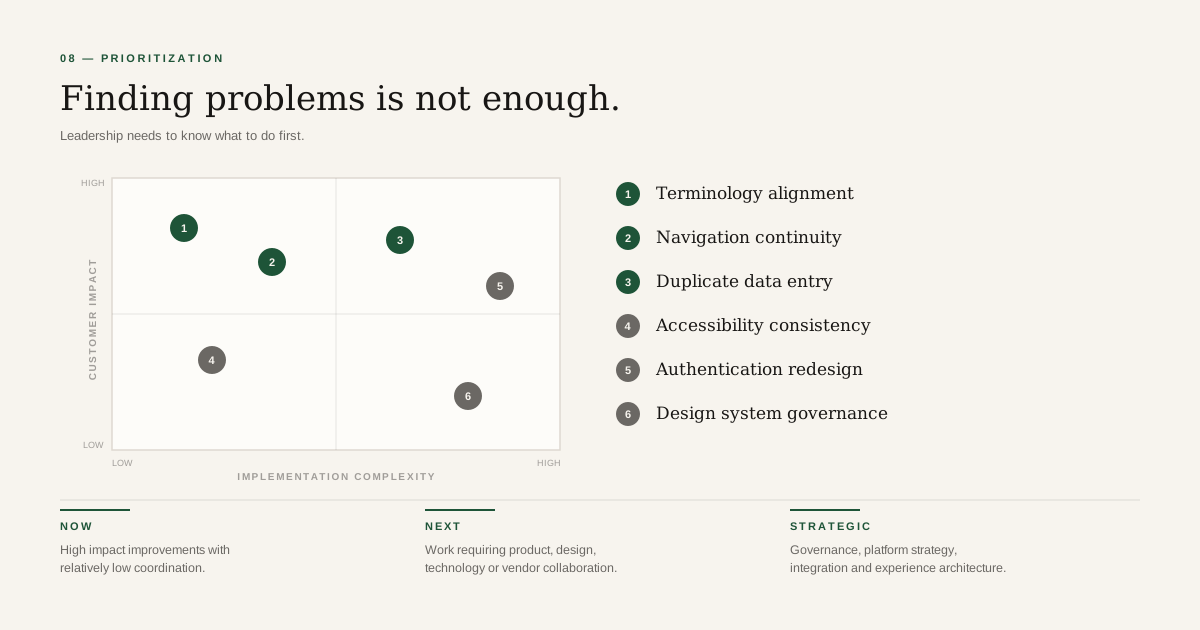
06Prioritized findings using a 2×2 matrix (Customer Impact × Implementation Complexity) into three action horizons — Now (high impact, lower coordination), Next (requiring cross-team collaboration), and Strategic (governance, platform standards, experience architecture).
Results and Impact
What changed
The Digital Experience Integration Framework gives product and digital leaders a structured way to evaluate customer experience across platform boundaries — rather than evaluating each vendor in isolation.
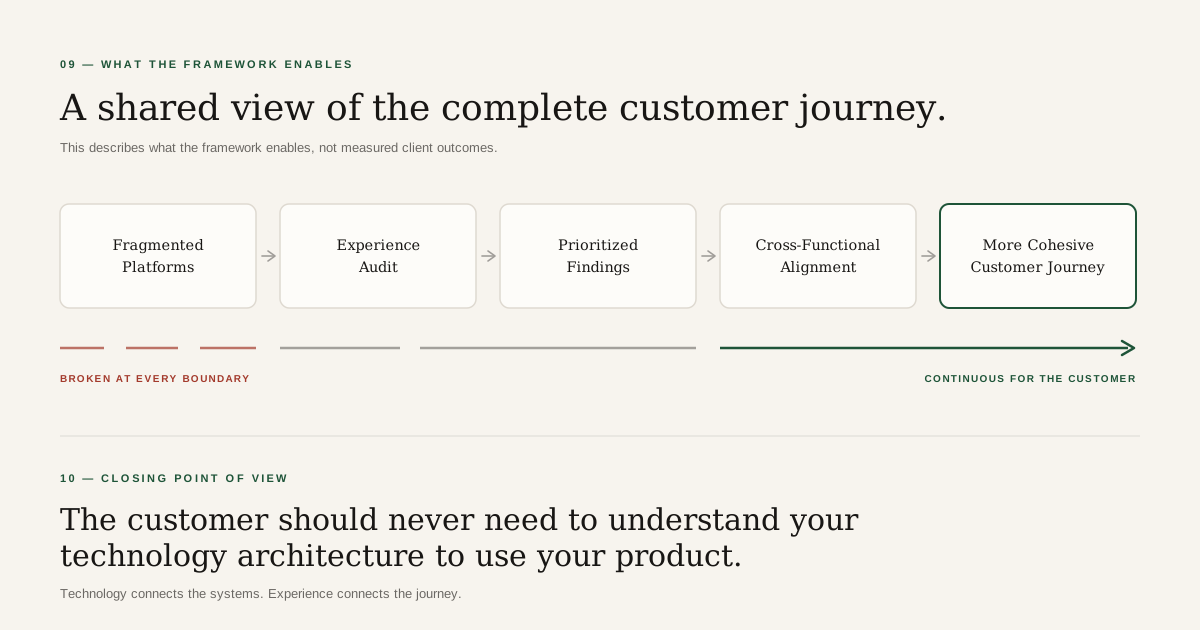
The framework creates a shared diagnostic language across product, design, technology, and vendor teams, enabling cross-functional alignment on where to improve and in what sequence.
The audit approach can be applied to any multi-vendor financial services ecosystem and adapted to other regulated industries where customer journeys cross organizational boundaries.
Closing principle: the customer should never need to understand your technology architecture to use your product. Technology connects the systems. Experience connects the journey.