Problem Statement
The challenge
Clinicians using CliniDocs faced inefficient patient search, lengthy and repetitive documentation flows, and data entry patterns that didn't match the real sequence of a psychiatric consultation — causing incomplete records and wasted clinical time.
Methodology
How the work moved
01Interviewed doctors, nurses, and administrative staff to understand how documentation was actually performed during and after consultations — revealing significant gaps between designed workflows and real use.
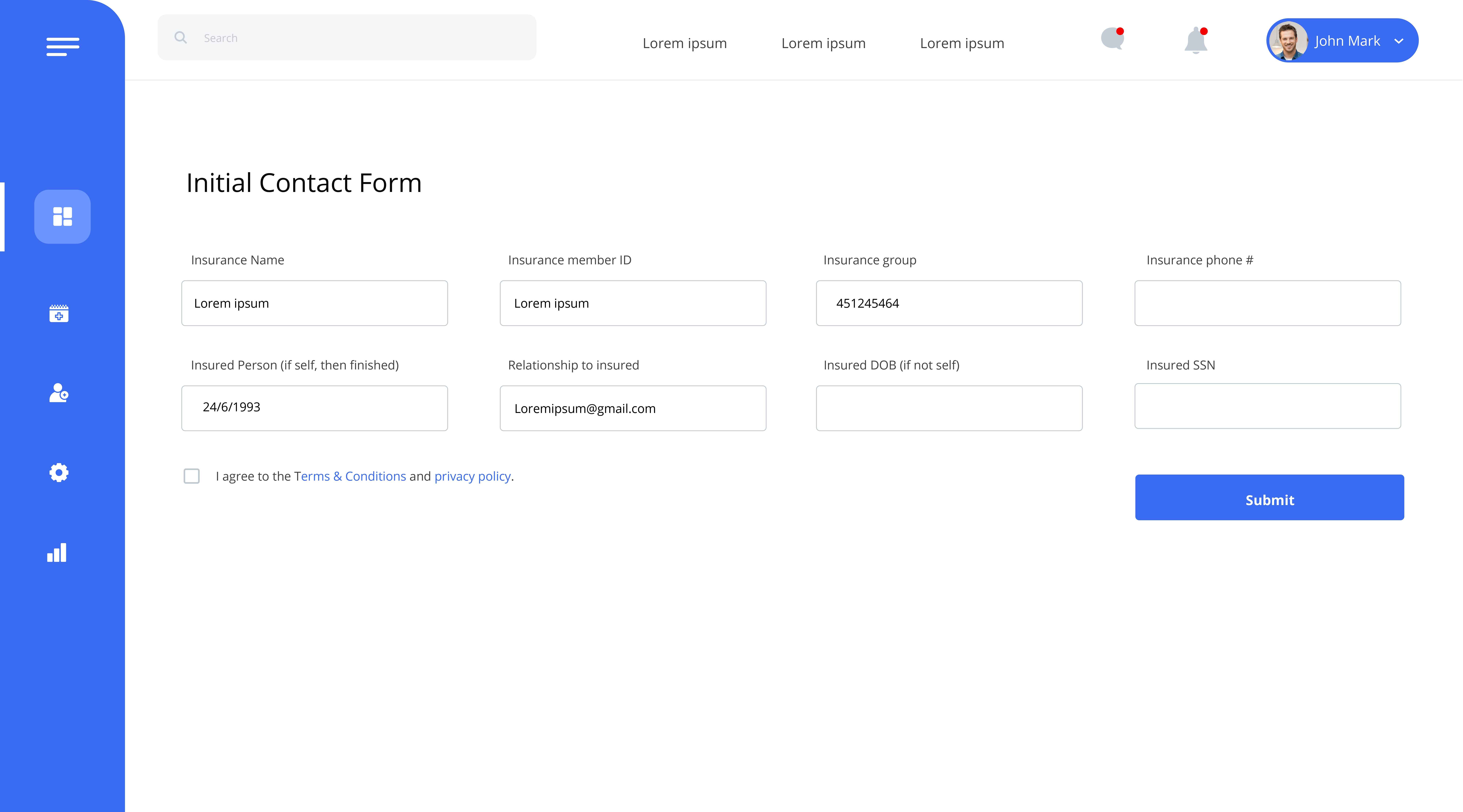
02Redesigned the patient dashboard, search filters, intake forms, and psychiatric note templates to match clinical sequence and reduce redundant data entry.
03Introduced consent prompts, privacy indicators, and structured note fields to improve data completeness and support compliance requirements.
Key Decisions
Decisions and tradeoffs
Restructured note templates to match the real clinical sequence rather than the existing form order.
- Alternatives considered
- [NEEDS INPUT: alternatives considered]
- Why I chose this
- Interviews revealed significant gaps between the designed workflow and how documentation was actually performed during and after consultations.
- What I would do differently
- [NEEDS INPUT: what I would do differently]
Introduced consent prompts, privacy indicators, and structured note fields.
- Alternatives considered
- [NEEDS INPUT: alternatives considered]
- Why I chose this
- To improve data completeness and support compliance requirements.
- What I would do differently
- [NEEDS INPUT: what I would do differently]
Results and Impact
What changed
Reduced average documentation time per patient by an estimated 35% based on staff feedback during testing.
Improved record completeness — fewer fields left blank per consultation compared to the prior system.
Staff reported being able to focus more of their attention on patients rather than screens during consultations.

.png)
.jpg)
.jpg)